
Reviews
REVIEW: His & hers – Netflix’s Latest Mystery Is a Twisty, One-Day Binge You Won’t See Coming


I’m always down for a twisty little show, and His & Hers almost completely flew under my radar. I remember seeing it pop up as one of Netflix’s big headline announcements and not thinking much of it at the time. It wasn’t until I noticed all the strong reviews rolling in—and saw it sitting comfortably in the Top 10 (I think around number three or four)—that I finally decided to give it a shot.
And honestly, His & Hers turned out to be such a breezy watch. It’s one of those shows you can easily knock out in a single day. Part of that is thanks to the short episode runtimes, but the real reason is how relentlessly it keeps throwing twists and turns at you. Just when you think you’ve got a handle on where things are going, it pulls the rug out from under you. The mystery keeps unfolding at a steady pace and builds toward a genuinely wild ending. I’ll straight up call BS on anyone who says they saw it coming—but credit where it’s due to the writers for hiding the truth in plain sight.
One standout element that might fly under a lot of people’s radar is the score by Mac Quayle (American Horror Story, Mr. Robot). It’s very minimalist, but the main theme is incredibly catchy and does a fantastic job establishing this constant sense of unease. There’s something ominous baked into the music, like danger is lurking around every corner, and it really helps set the tone from the jump.
Performance-wise, the entire cast delivers. Tessa Thompson’s Anna Andrews is presented from the very beginning as someone you shouldn’t fully trust. There’s clearly something she’s hiding, which immediately frames her as a potential culprit in these murders. Thompson leans into that ambiguity beautifully, playing the character in a cryptic, almost femme fatale-like way—ambitious, alluring, and quietly dangerous. Jon Bernthal is also great as the detective who gets pulled into this web of lies in a very personal way, for reasons the show lays out early on. He excels at playing these simmering, passive-aggressive types. The dynamic between him and Thompson really works, especially in the fleeting moments of tenderness that break through the bitterness and resentment shaped by a major loss in their past.
All in all, if you’re looking for a show that keeps you guessing, on edge, and occasionally outright shocked, this one is absolutely worth checking out.

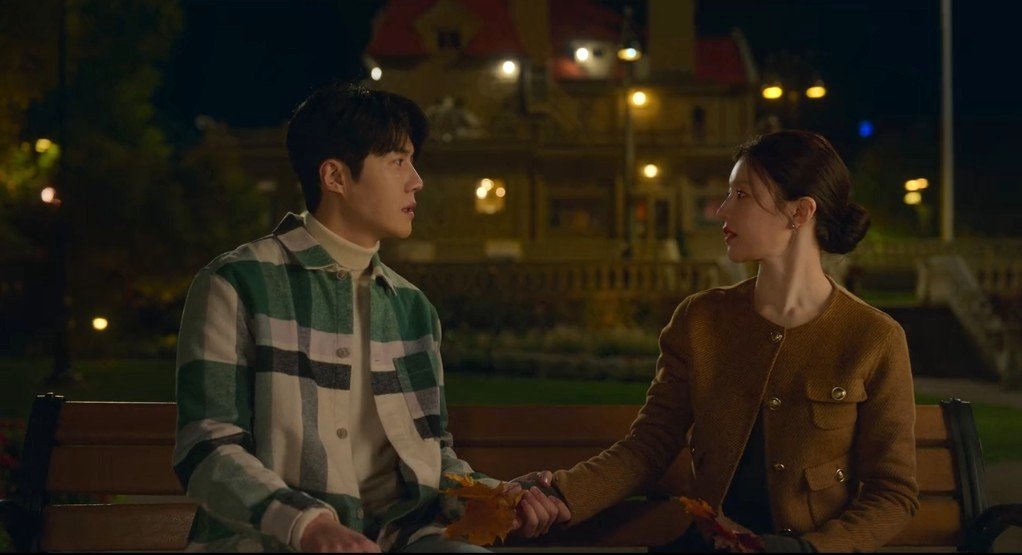
Every great movie or series lives or dies by its ability to offer something fresh. That doesn’t mean reinventing the wheel every time—plenty of filmmakers know how to take a familiar formula and make something special out of it—but there’s something particularly exciting when a project finds a new angle or an unexpected twist. Can This Love Be Translated doesn’t break new ground in terms of genre mechanics, but it smartly reshuffles rom-com conventions in a way that feels light, playful, and just different enough to stand out.
The hook is immediately appealing. The series follows a young actress who suffers an accident while filming her latest project, only to wake up from a coma months later as a bona fide superstar. As she struggles to adjust to her sudden fame, she crosses paths with a man who works as a translator for various people and productions, including a project where she stars opposite a popular Japanese actor—naturally setting the stage for a potential love triangle. It’s a familiar setup on paper, but the series finds a lot of charm in how it plays with perspective, communication, and timing.
Romance is where the show truly shines. The central relationship is engaging and emotionally grounded, even if the comedy doesn’t always land as strongly as it aims to. Still, the series makes clever use of language barriers and cultural misunderstandings, wringing genuine humor and awkwardness out of moments where communication fails—or almost succeeds.
Go Youn-jung is a strong anchor for the series, bringing warmth, vulnerability, and spark to a character juggling newfound fame, romance, and unresolved trauma. That latter element feeds into a subplot that resolves in a way that’s quieter and more thoughtful than expected. Kim Seon-ho proves once again why he’s such a reliable romantic lead; his easy charm and grounded performance make the emotional pull of the relationship feel earned. Their chemistry is excellent, and it becomes the driving force behind the series, making the inevitable question of “will they or won’t they?” genuinely compelling. The ending, thankfully, lands on a sweet and satisfying note.
Fukushi also makes a strong impression as the potential third point in the romantic triangle. The decision to maintain a language barrier between him and Go Youn-jung’s Moo-hee is a smart one, leading to several awkward, amusing, and surprisingly tender moments. He brings a welcome dose of charm that helps keep the dynamic balanced rather than predictable.
In the end, Can This Love Be Translated succeeds by embracing a familiar framework and finding small but meaningful ways to refresh it. It’s a breezy, enjoyable watch, elevated by strong performances and a clever use of language and miscommunication, and while it may not redefine the rom-com, it delivers exactly what it promises—with enough personality to make it linger.

Going into this series, I was a little apprehensive. A lot of the period dramas I’ve seen over the years (especially the ones I’ve watched with my mom) have been pretty hit or miss, often failing to live up to the hype they build during their run.
Thankfully, this one hooked me almost immediately. The premise was interesting enough on paper, but the execution is what really won me over — and it’s as carefully crafted as the exquisite cuisine featured throughout the show. Every meal looks mouthwatering, and I genuinely loved the playful visual effects that pop up as characters dig into their food. Just when I thought that gag might start wearing thin, I found myself laughing even harder. There’s a strong sense of whimsy and charm running through the entire series, and it’s incredibly infectious. Even with all the political maneuvering, backstabbing, and palace intrigue, there’s still this comforting, feel-good tone that adds a welcome layer of levity.
Chae-min and Yoon-ah are fantastic together, with chemistry that’s honestly off the charts. The show sticks closely to rom-com conventions, but as the saying goes, if it ain’t broke, don’t fix it. Individually, they’re just as good: he plays the stubborn, grumpy “tyrant” type perfectly, while she brings a joyful, carefree energy that instantly lights up every scene she’s in. I’ve loved both actors in previous projects (Crash Course in Romance and King the Land / EXIT), and it was genuinely satisfying to see that their appeal wasn’t a one-time thing. This definitely made me want to dig deeper into their filmographies.
What really impressed me is how well the show balances its tones. It never loses sight of its romantic comedy roots, but it also doesn’t shy away from leaning into the political intrigue when needed. That combination keeps things lively and prevents the story from ever feeling stagnant or overly fluffy.
All in all, this is a delightful — and often downright hysterical — period rom-com that delivers big on charm while still offering enough intrigue to keep things interesting. Anchored by strong writing and excellent performances across the board, it’s one of those shows that’s just easy to fall in love with.

It’s honestly pretty rare these days for a K-drama to hook me and make me laugh right from the very first episode, but this one pulled it off without breaking a sweat.
The premise itself is fairly simple, yet I was immediately locked in. We follow this troubled son who’s basically forced into taking over the family business, only to find himself buried under problem after problem — seriously, this guy is living inside a full-blown Murphy’s Law loop. On top of that, the company is on the brink of shutting down, caught in the middle of the very real financial crisis Korea was dealing with at the time. Add in a rivalry between companies, and suddenly you’ve got a setup that delivers some genuinely tense and exciting moments. Every episode is a blast, packed with humor that consistently lands and got more than a few laughs out of me. And thankfully, the show actually sticks the landing in a really satisfying way.
On the performance side, the cast absolutely delivers. Watching Lee Jun-ho’s Kang evolve over the course of the series was one of the biggest pleasures here. Jun-ho’s magnetic charm makes it incredibly easy to root for him, and I found myself fully invested in seeing him succeed. Kim Min-ha’s Oh Mi-seon is much more reserved, which only makes the moments when she breaks that calm exterior — like that punch — hit even harder. I’m not ashamed to admit I fist-pumped the air during that scene. The chemistry between the two is genuinely great and incredibly cute, giving the romance some real warmth.
Moo Jin-sung, meanwhile, is perfectly cast as the antagonist. He’s the kind of character you immediately grow to hate, and the actor leans hard into the arrogance and sleaziness. He’s the exact opposite of Kang, and the show does a great job making you hope he eventually crashes and burns. The supporting cast is also strong across the board, especially those providing comic relief, who consistently steal scenes and keep the energy high.
All in all, this is a joyful watch from beginning to end, anchored by strong performances, a solid script, and confident direction. Sure, some episodes are stronger than others, but I stayed engaged throughout all 16 episodes — which isn’t always the case with K-dramas for me. A lot of shows in this genre lose me halfway through, but this one had me fully invested the entire time.

Orbit Culture Release Live Video For «The Storm» + North American Tour Starts 2/18

Acclaimed Texas Alt-Rock Band SPARTA Stream New Documentary, «Scenic Drive,» Today Via VEEPS; Information On New Album To Be Announced Soon

Intergalactic Thrashers FULLMINATOR Unleash Music Video for «2099 Ninjas»

Hozier To Join Joan Baez, Van Morrison, Stevie Van Zandt, George Thorogood, Mike Campbell, Bobby Rush + More At Sweet Relief’s Benefit Concert Honoring Taj Mahal February 21 At Masonic Auditorium

Best of 2025

REVIEW: Dynamite Kiss
-
 Music7 meses ago
Hozier To Join Joan Baez, Van Morrison, Stevie Van Zandt, George Thorogood, Mike Campbell, Bobby Rush + More At Sweet Relief’s Benefit Concert Honoring Taj Mahal February 21 At Masonic Auditorium
-
 Uncategorized8 meses ago
Best of 2025
-
 Reviews8 meses ago
REVIEW: Dynamite Kiss
-
 Reviews8 meses ago
REVIEW: As You Stood By – A Brutal, Unflinching Korean Thriller That Refuses to Look Away from Domestic Abuse
-

 News8 meses ago
Teresa Palmer Joins Ryan Hurst In Prime Video’s ‘God Of War’
-
 Music7 meses ago
Acclaimed Texas Alt-Rock Band SPARTA Stream New Documentary, «Scenic Drive,» Today Via VEEPS; Information On New Album To Be Announced Soon
-

 Reviews8 meses ago
REVIEW: Pro Bono Brings a Fresh Twist to the Courtroom K-Drama Formula
-

 Music8 meses ago
GHOST’S COVER OF IT’S A SIN AVAILABLE NOW